
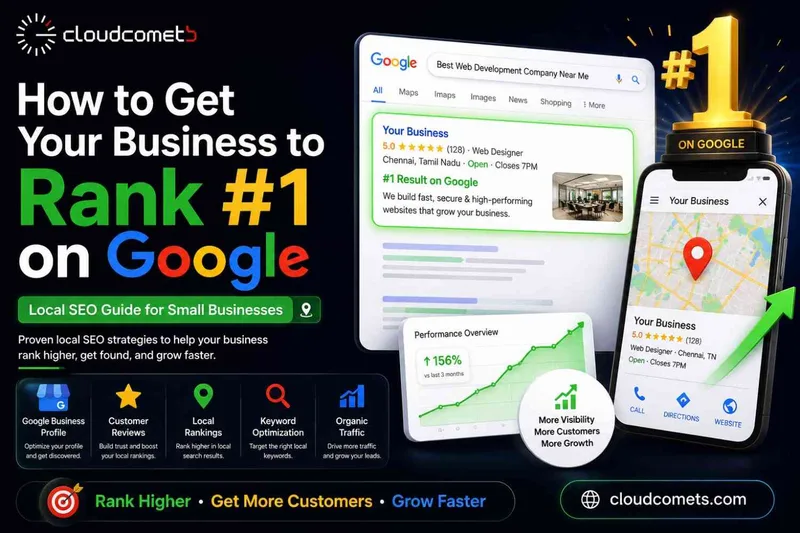
How to Get Your Business to Rank #1 on Google (Local SEO Guide)
A step-by-step local SEO guide to help your business rank higher on Google Maps and local search results — no agency jargon, just what actually works.

CloudComets Team
Engineering & Design Studio
Published by CloudComets Team
Why Local SEO Matters More Than Ever When someone searches "[service] near me" or "[service] in [city]," Google shows a map with three local results before any regular website listings. If your business isn't in that map pack, you're invisible to a huge share of ready-to-buy local searchers — no matter how good your website is.
Step 1: Claim and Fully Complete Your Google Business Profile
This is the single highest-impact step. Fill out every section — category, services, hours, photos, service area — completely and accurately. Incomplete profiles rank worse than complete ones, even with fewer reviews.
Step 2: Get Your Category Right
Choosing the correct primary business category (and relevant secondary categories) significantly affects which searches you show up for. A mismatched category is one of the most common — and easiest to fix — local SEO mistakes.
Step 3: Collect Reviews Consistently
Review count and recency both influence local ranking. Rather than a one-time push, build a habit of asking every satisfied customer for a review — consistency over time outperforms a single burst of reviews.
Step 4: Keep Your NAP Consistent Everywhere
Your Name, Address, and Phone number (NAP) should match exactly across your website, Google Business Profile, and every online directory you're listed in. Inconsistencies confuse Google's local algorithm and can quietly hurt rankings.
Step 5: Add Location Pages to Your Website
If you serve multiple areas, dedicated pages for each location or service area — with genuinely useful, unique content, not copy-pasted text — help you show up for searches specific to each area.
Step 6: Get Listed in Relevant Local Directories
Beyond Google, listings in relevant industry directories and local business associations build the kind of citation network that supports local rankings.
Step 7: Publish Content That Answers Local Questions
Blog posts or pages answering questions specific to your area or industry — pricing norms, local regulations, seasonal considerations — signal relevance and give you more pages that can rank.
Step 8: Make Sure Your Site Is Mobile-Friendly and Fast
Most local searches happen on mobile, often while someone is out and about. A slow or hard-to-navigate site on mobile loses the exact customers local SEO is meant to bring in.
The Timeline to Expect
Local SEO is not instant — meaningful movement typically takes a few months of consistent effort, not a one-time setup. Businesses that treat it as an ongoing habit rather than a single project consistently outperform those looking for a quick fix.
Where Most Businesses Get Stuck
The steps above are straightforward individually, but doing all of them consistently — especially reviews and content — is where most business owners run out of time. That's usually the point where bringing in dedicated help makes the difference between a stalled profile and a genuinely ranking one.
In Summary
Building right from the start ensures long-term performance, security, and growth for your digital presence.
Related Articles
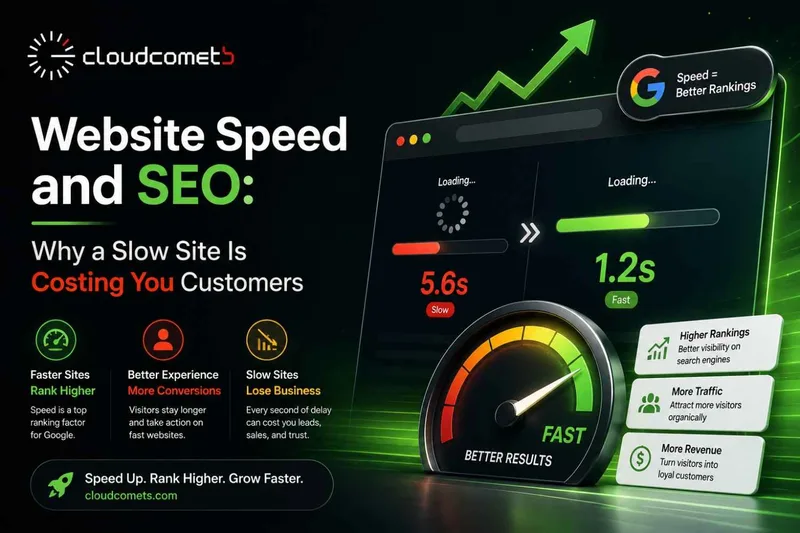
Website Speed and SEO: Why a Slow Site Is Costing You Customers
Slow website load times don't just frustrate visitors — they hurt your Google rankings too. Here's how speed and SEO are connected, and how to fix it.

How Much Does It Cost to Build a Website in 2026?
A clear breakdown of what it actually costs to build a business website in 2026 — by site type, features, and what drives the price up or down.
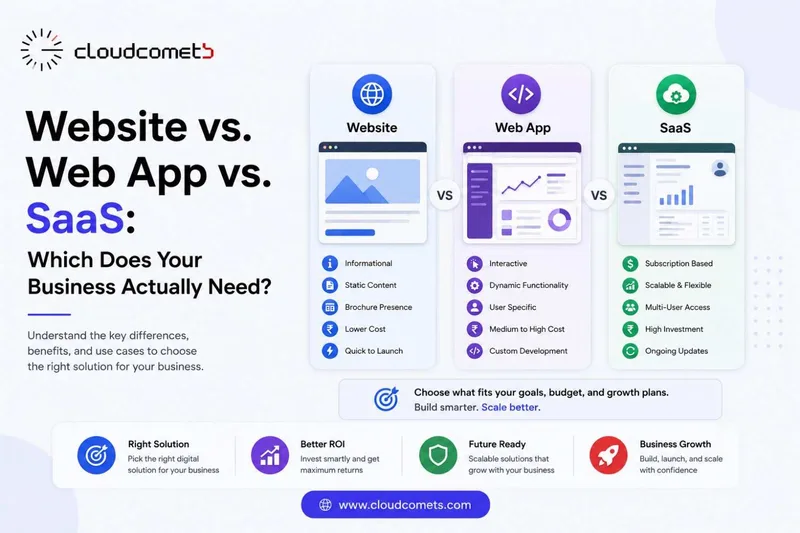
Website vs. Web App vs. SaaS: Which Does Your Business Actually Need?
Confused about whether you need a website, a web app, or a SaaS product? Here's a plain-English breakdown to help you choose correctly the first time.